
Beyond the $100,000 Fee: Why H-1B Matters for America
In September 2025, President Trump signed a proclamation requiring a $100,000 fee for new H-1B visa petitions, sparking renewed debate about America's approach to skilled immigration. The administration justified this measure by citing "large-scale replacement of American workers through systemic abuse of the program" that has "undermined both our economic and national security." But this dramatic policy shift raises a fundamental question: Is the H-1B program something we shouldn't have at all, or does it require thoughtful reform rather than punitive measures that may undermine its core purpose?
A Historical Foundation: Immigration as Economic Engine
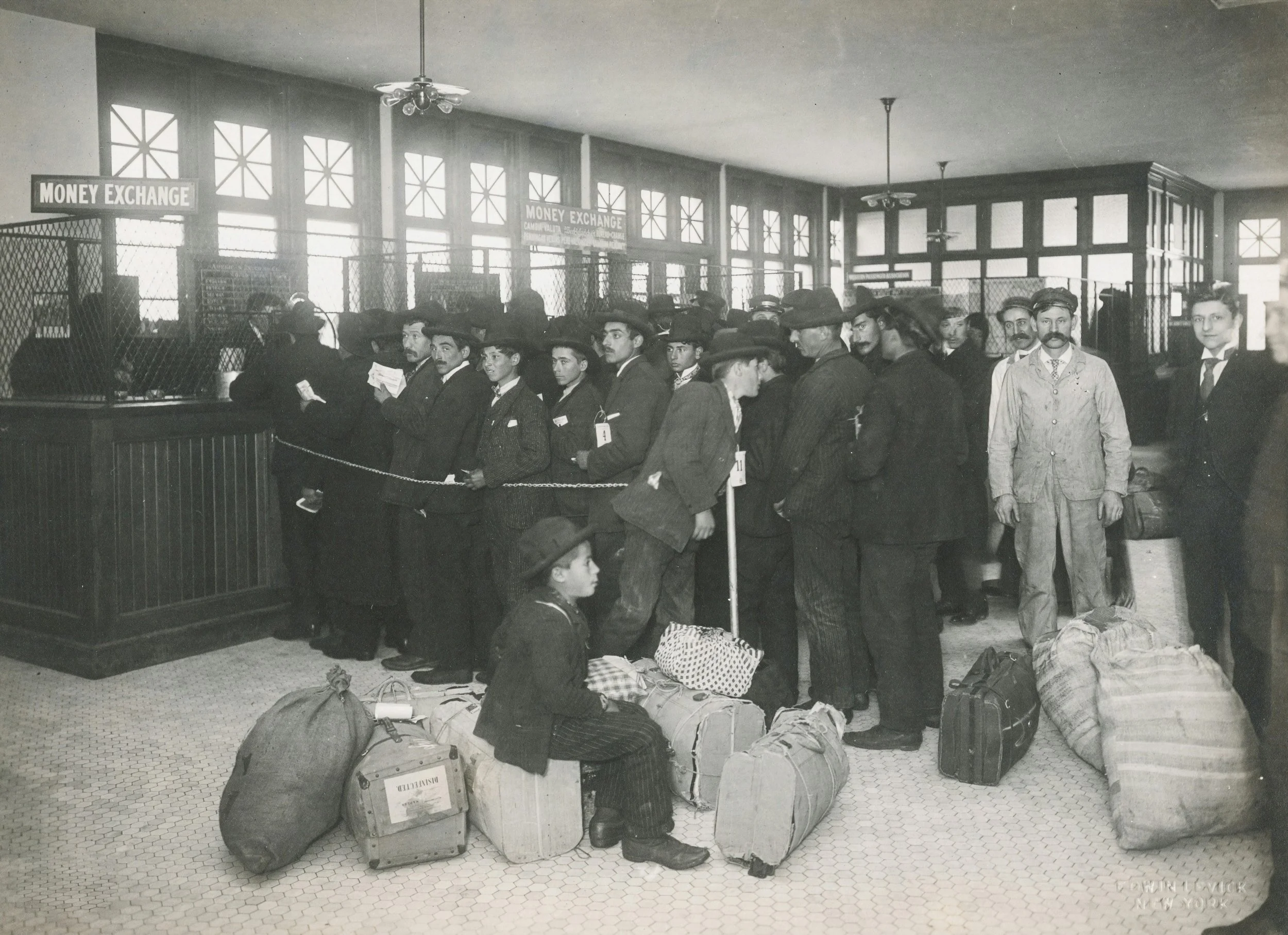
To answer this question, we must first understand immigration's role in building American prosperity. During the early twentieth century, immigration fundamentally shaped the United States into an economic powerhouse. Immigrants and their children comprised over half of manufacturing workers in 1920, and recent immigrants and their descendants were the primary workforce in the rapidly expanding manufacturing economy, the engine that propelled America to global economic leadership.
Between 1870 and 1900, nearly 12 million immigrants arrived in the United States, many fleeing economic hardship and seeking opportunity, and their contributions extended far beyond filling factory positions. Higher historical immigration between 1860 and 1920 resulted in significantly better social and economic outcomes that persist today, as immigrants contributed to increased agricultural productivity, innovation measured by patenting rates, and the establishment of larger manufacturing facilities.
The lesson from this era is clear: strategic immigration policy doesn't just fill immediate labor needs. It creates lasting prosperity that compounds across generations.
The Modern Economic Case for H-1B
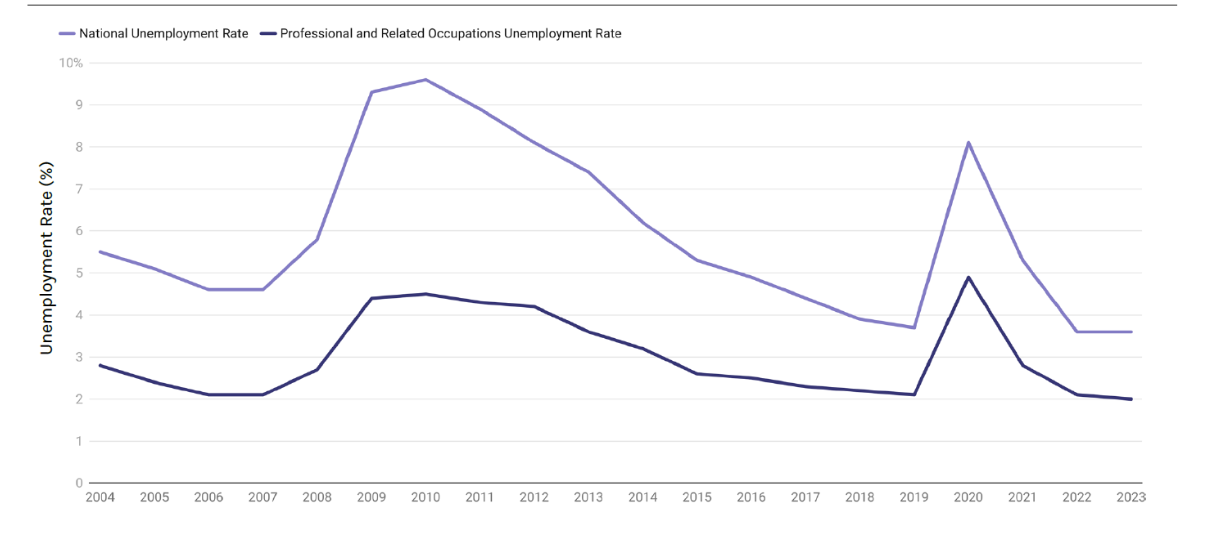
Today's H-1B program serves a similar function in our knowledge economy. Foreign workers fill a critical need in the U.S. labor market, particularly in science, technology, engineering, and mathematics (STEM) fields, where H-1B workers complement U.S. workers and expand job opportunities for all. As seen in the table below, from 2005 to 2018, occupations that saw a higher proportion of H-1B visa holders among their workers tended to experience lower unemployment rates. Rather than displacing American workers, H-1B workers help create more opportunities by enabling business expansion, innovation, and competitiveness.
Table 1: Unemployment Rate in the United States, 2004 - 2023
When restrictions on H-1B visas increase, U.S.-based multinational corporations respond by decreasing the number of jobs they offer domestically and instead increasing employment at their existing foreign affiliates or opening new foreign affiliates, particularly in India, China, and Canada. This means that overly restrictive immigration policies do not protect American jobs; they export them.
Built-In Worker Protections
Importantly, the H-1B program already contains significant protections for American workers, protections that are often overlooked in heated political debates. All H-1B employers must provide H-1B workers with working conditions that will not adversely affect the working conditions of similarly-employed U.S. workers, and certain H-1B dependent employers must show that they recruited and offered jobs to U.S. applicants who are equally or better qualified.
Before an employer can file a petition with USCIS, the employer must attest on a labor condition application certified by the Department of Labor that employment of the H-1B worker will not adversely affect the wages and working conditions of similarly employed U.S. workers. These aren't merely formalities: they represent enforceable legal requirements designed to prevent the very abuses the administration claims to address.
The Path Forward: Reform, Not Elimination
The real issue isn't whether America should welcome highly skilled foreign workers; rather, it's ensuring program compliance and addressing genuine abuses. President Trump's proclamation itself states that the H-1B program "was created to bring temporary workers into the United States to perform additive, high-skilled functions, but it has been deliberately exploited to replace, rather than supplement, American workers with lower-paid, lower-skilled labor."
This framing is crucial. The problem identified isn't the program's existence or fundamental purpose. It's a violation of the program's intended use. When employers misuse H-1B visas to undercut American workers' wages or replace qualified Americans with cheaper foreign labor, they're breaking the rules. The solution to rule-breaking isn't eliminating the rule book; it's better enforcement.
A $100,000 fee is not anticipated to solve the issues of undermined economic and national security that the proclamation identifies. On the surface, such a fee might seem to address unemployment among American workers by reducing the number of foreign workers in the United States. But this perspective misses a fundamental truth: immigrants are the ones who have been strengthening our national security and economy by creating jobs in the first place.
The very workers we're restricting are often the entrepreneurs, innovators, and job creators who expand opportunities for everyone. They don't just fill positions: they build companies, file patents, and generate employment for American workers. Pricing out skilled foreign talent doesn't protect American jobs; it prevents the creation of new ones.
What Makes America, America
Immigration has always been what strengthens America's national security and economy. It's what makes the United States the United States. From the factory workers who built our industrial might in the early 1900s to the engineers and scientists driving today's technological revolution, immigrants have been essential to American exceptionalism. A few examples are Jensen Huang (CEO of NVIDIA), Satya Nadella (CEO of Microsoft), Elon Musk (CEO of Tesla), and Arvind Krishna (CEO of IBM).
The H-1B program, when functioning properly, continues this tradition. We need reform that fundamentally tackles the issue of abuse: enforcement mechanisms, compliance oversight, and accountability for employers who violate the program's intent. But we cannot allow the existence of bad actors to justify policies that would effectively dismantle a program critical to America's continued leadership in innovation, technology, and global competitiveness.
The choice before us isn't between protecting American workers and welcoming skilled immigrants. History and evidence show these goals are complementary, not contradictory. We must continue to use H-1B in the interest of the United States, not through a prohibitive fee that undermines the program, but through genuine reform that ensures it serves its intended purpose: bringing the world's best talent to American shores, where they can contribute to the prosperity and security that benefits us all.